Capstone Progress
Tess Doyle
MCAD, MAGWD Fall 2026
Project Brief — Revised
Project Brief for Pressed & Sown.
The Goal:
Pressed & Sown highlights the importance of native plant ecosystems in Texas and neighboring North American regions. It aims to assist it’s users to find a healthy balance with technology & the natural world, and an opportunity to connect meaningfully with their natural environments and communities.
The Challenge:
Encouraging amateur & experienced Texas gardeners, to consider planting native plants in their gardens. Pushing sustainability beyond the garden & into small, low-impact, sustainable creative practices.
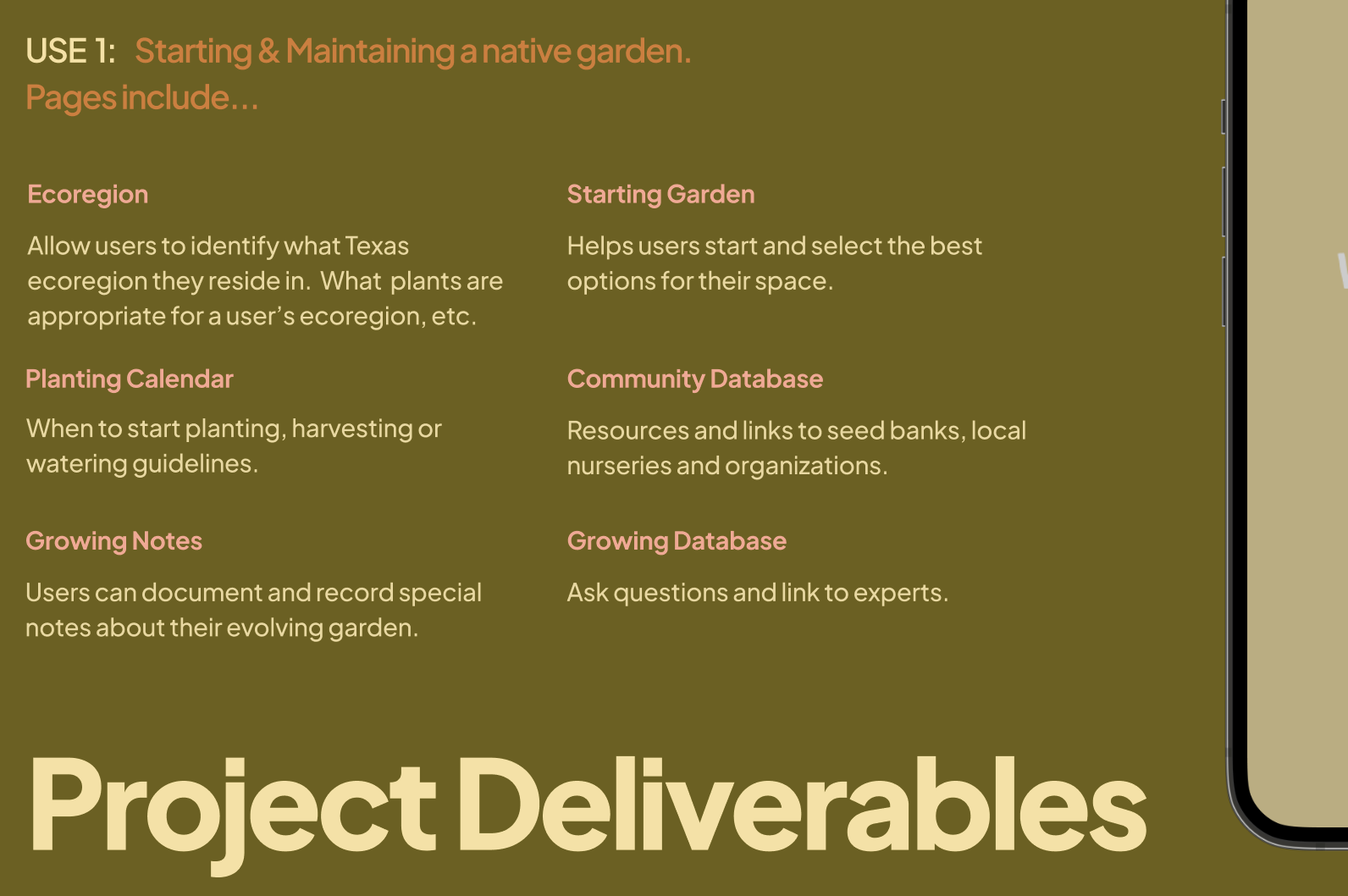
Project proposal
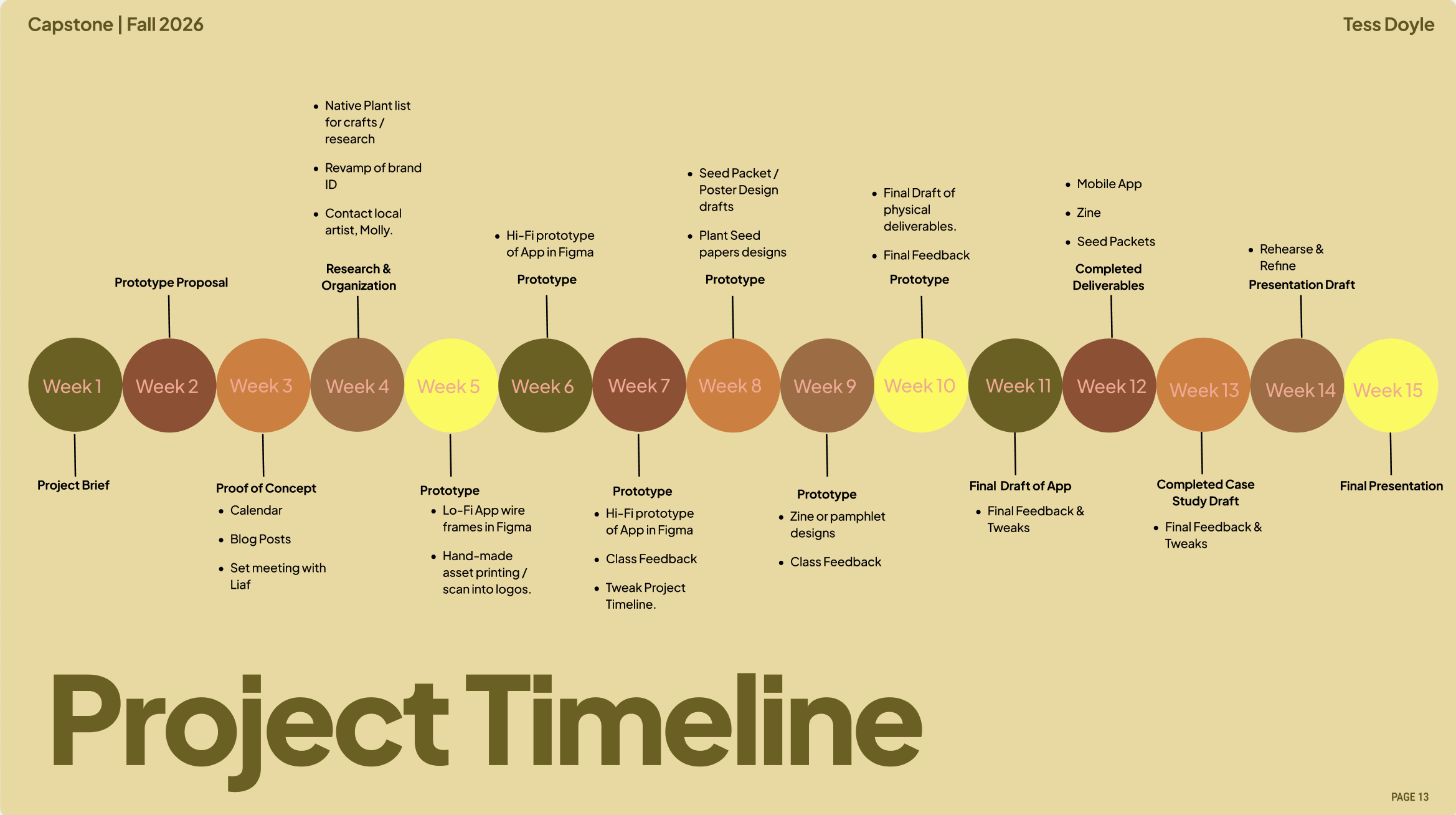
Project Timeline

September To-do list
Linked as a Google Doc
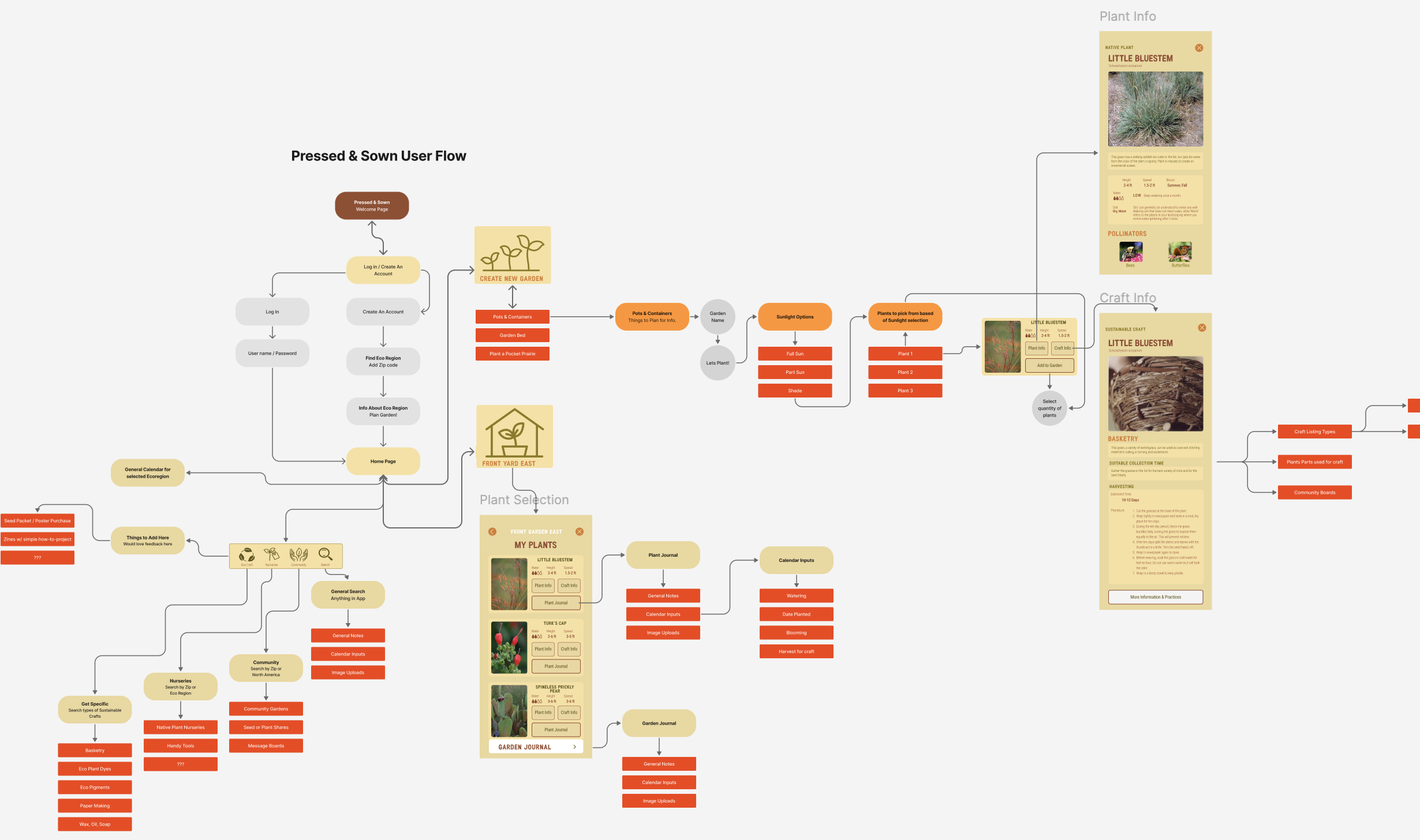
Update on mobile app pages that need to be built out.
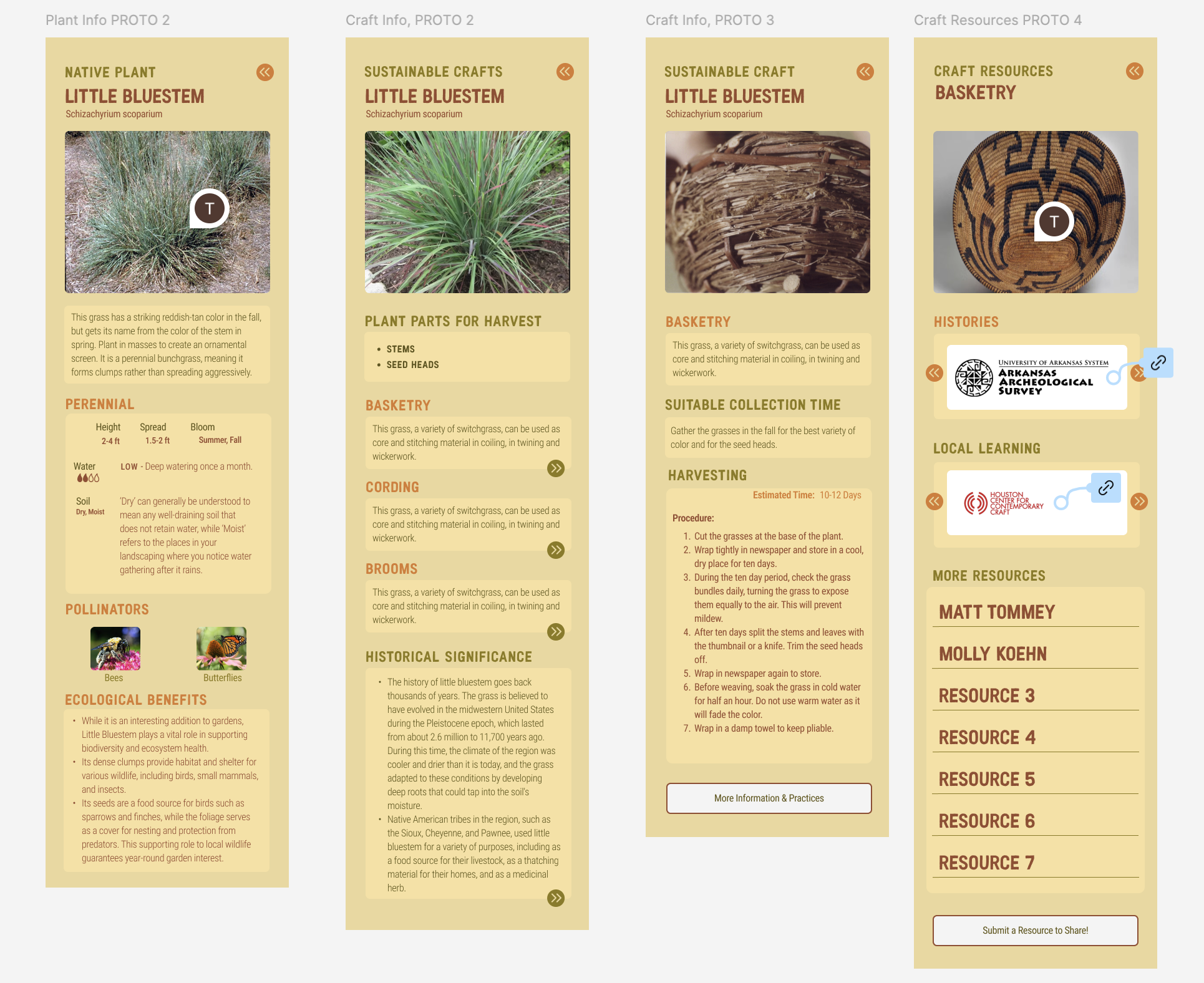
Plant & Craft Pages built out and tweaked. Still need to add interactions and some links. Created on FIGMA
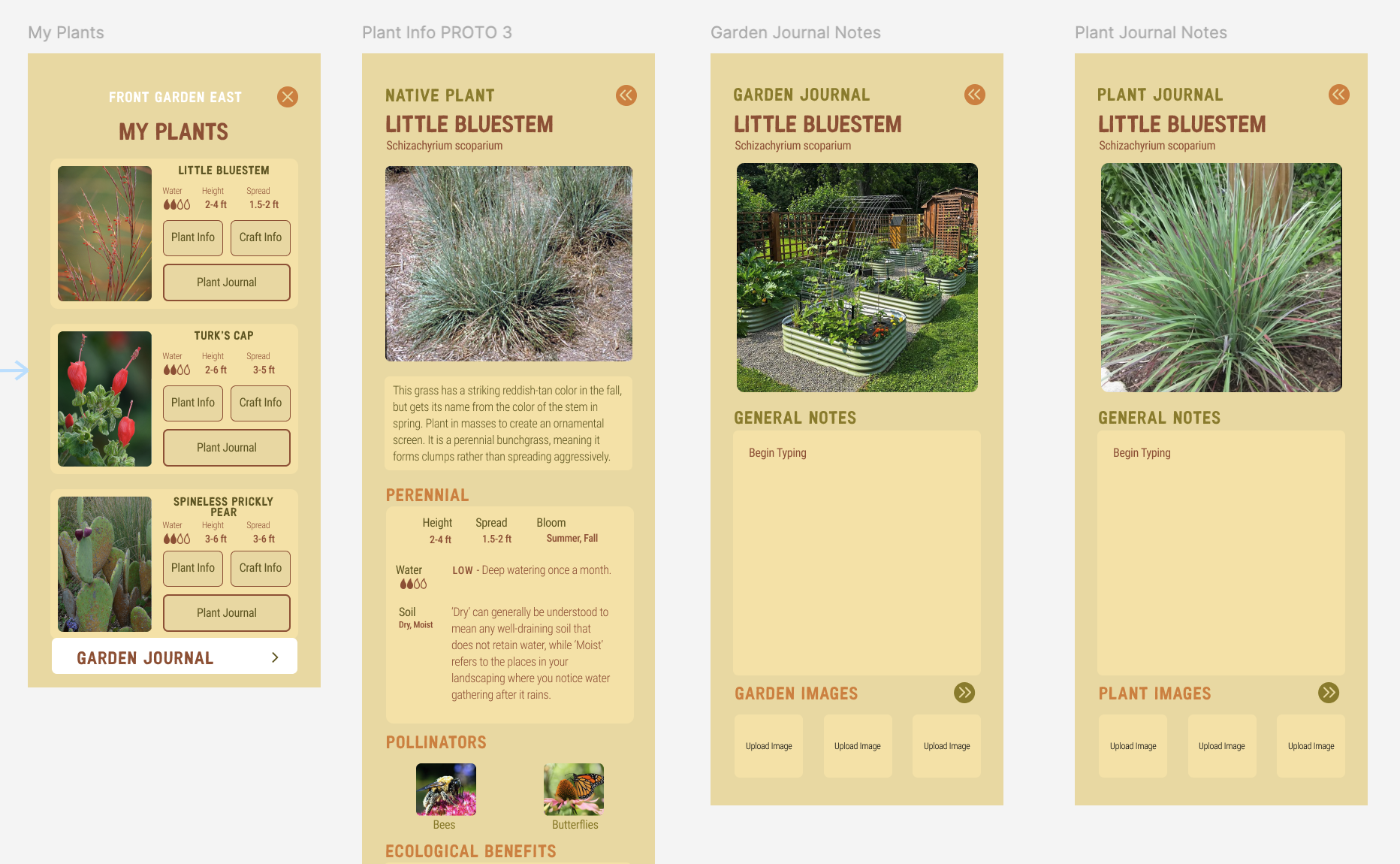
Week 5 Prototype Update
Plant & Craft Pages built out and tweaked. Still need to add page and some links. Created on FIGMA.
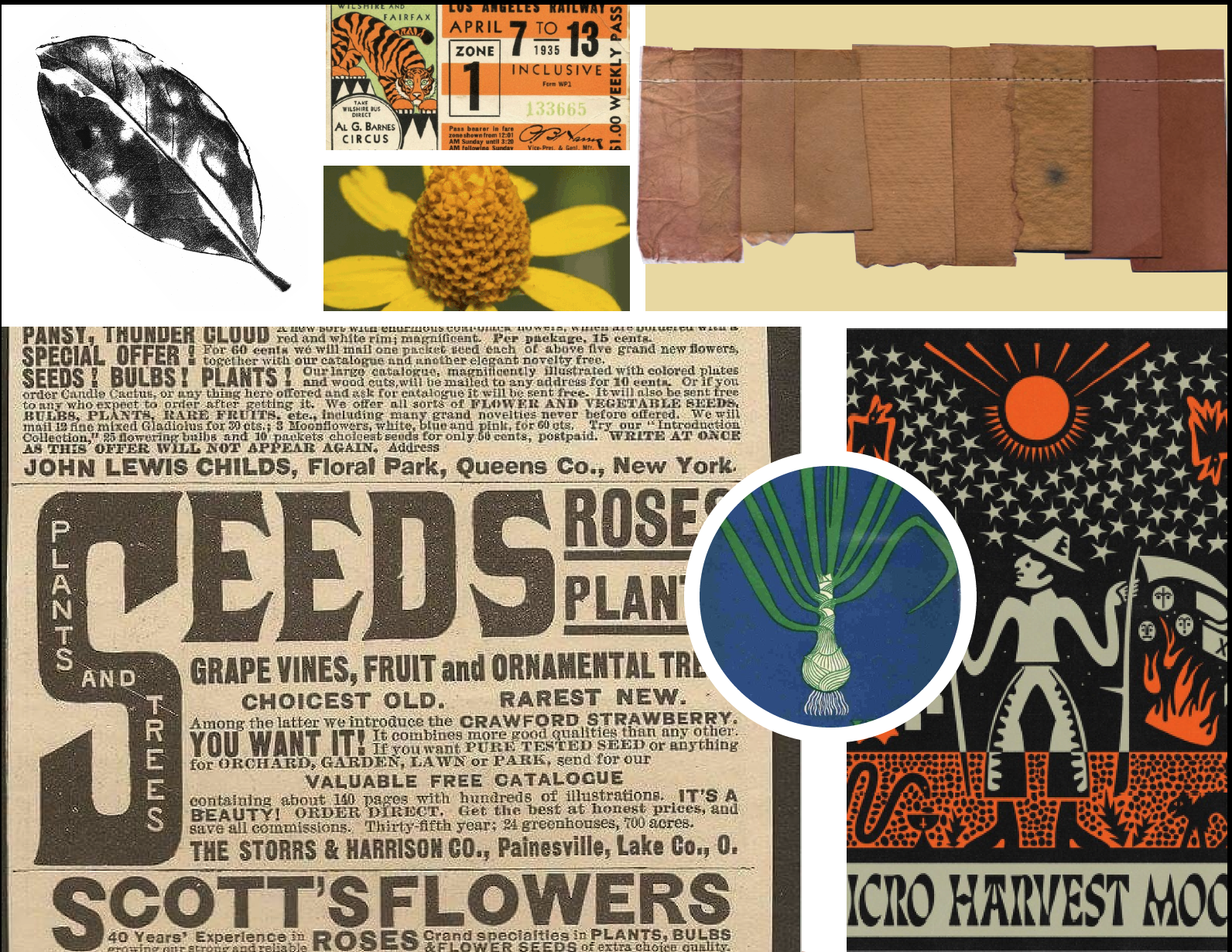
Mood-board from Prototype 1
Asset Prototypes
Link to Figma Prototypes
There is a copy of the original assets. I am considering changing the colors. So I’ll have a Prototype Update on Figma as well.
Items considering changing:
Brand Colors
Typeface
Need to add:
Image Identities — Meaning something that looks hand-made or hand-printed.
Would love feedback on any of this!
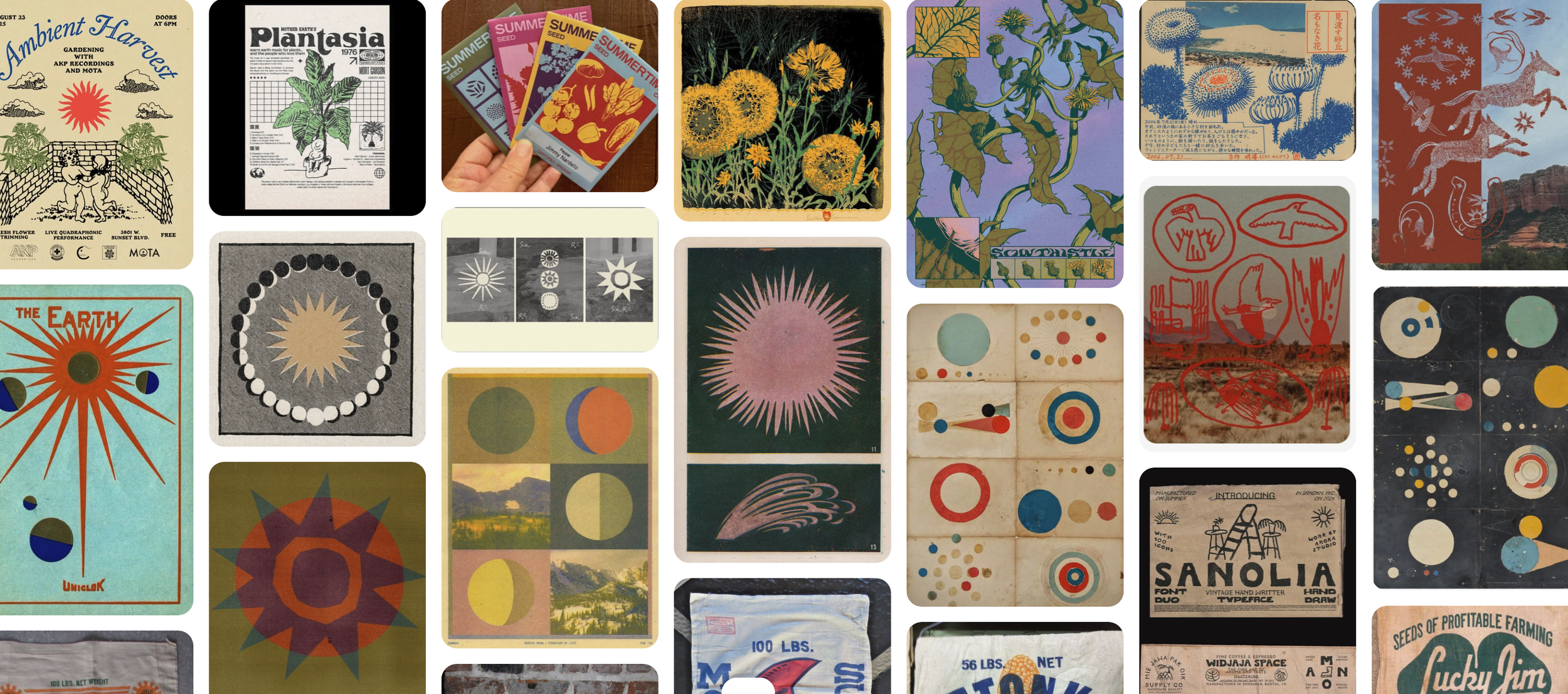
Pinterest Moodboard
Look & Feel Inspiration.
Project Research
Local Resources:
Houston Botanical Gardens
Texas nativescapes
Texas Cob Co.
Experts / Artisans:
Molly Koehn
- Document Shared: 00 working list of plants for textiles, baskets, dyes, and pigments
Books / Publications:
Edible and Useful Plants of Texas and the Southwest by Delena Tull
Similar Research on connected to Craft & Sustainability:
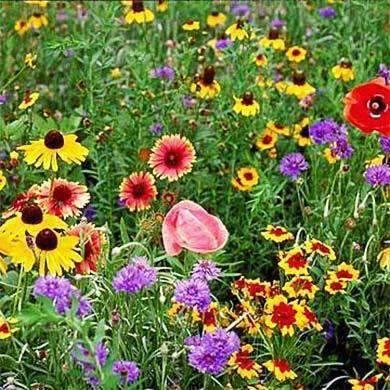
Types of Crafting – prompts to potentially add in mobile app:
Fiber & Weaving Crafts
Basketry — Made from pliable plant materials: willow, rattan, bamboo, reeds, pine needles, sweetgrass, and vines. Different techniques (coiling, plaiting, twining) suit different fiber types.
Textile weaving — Fibers extracted from plant stems and leaves: flax (linen), cotton (seed fiber), hemp, jute, ramie, and banana/abaca fiber. The stem fibers usually need retting (controlled rotting) to separate fiber from woody material.
Cordage and rope-making — Twisted or braided fibers from agave, yucca, nettle, milkweed, and inner tree bark (like linden/basswood).
Mat and hat weaving — Palm leaves (like pandanus or raffia palm), rice straw, and rushes woven into tatami-style mats, sun hats, and floor coverings.
Paper & Bark Crafts
Papermaking — Traditional papers use mulberry bark (washi in Japan, hanji in Korea), bamboo pulp, and papyrus reed pith.
Bark cloth — Made by pounding the inner bark of trees like paper mulberry or fig — practiced in the Pacific (tapa cloth) and parts of Africa (bark cloth from Uganda).
Birchbark crafts — Boxes, canoes, and baskets made from peeled birch bark, common in Scandinavian and Native American traditions.
Dyeing Materials
Plants supply natural dyes extracted from various parts:
Roots: madder (red), turmeric (yellow)
Leaves: indigo, henna
Bark: oak, walnut hulls (brown)
Flowers: marigold, safflower
Wood: logwood (purple/black)
Wood & Woody Crafts
Woodcarving and joinery — Furniture, tools, masks, and sculpture from various hardwoods and softwoods.
Cork crafts — Bark of the cork oak, used for stoppers, flooring, and decorative items.
Bamboo crafts — Extremely versatile — used whole or split for furniture, scaffolding, musical instruments, and woven items.
Other Extracted Materials
Resins and gums: pine resin, gum arabic (from acacia) — used as adhesives, varnishes, or in lacquerware
Latex/rubber: from rubber trees, historically used in Mesoamerican crafts
Plant waxes: carnauba and candelilla wax for polishes and candles
Seeds, gourds, and pods: dried and used whole for rattles, containers, jewelry, and instruments
Straw: wheat and rice straw for straw marquetry, corn husk dolls, and thatching
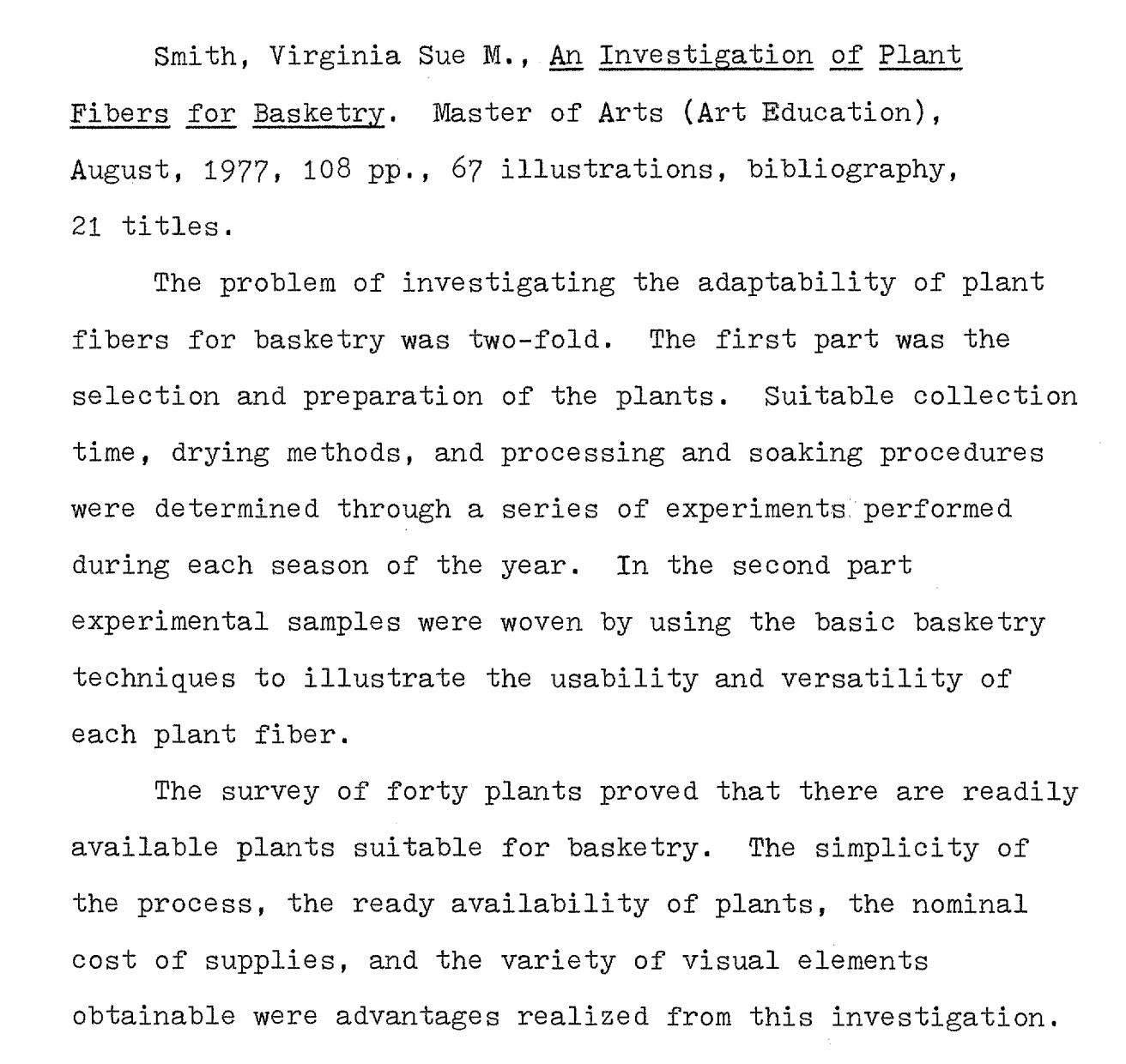
Virginia Smith’s Research
An Investigation of Plant Fibers for Basketry.
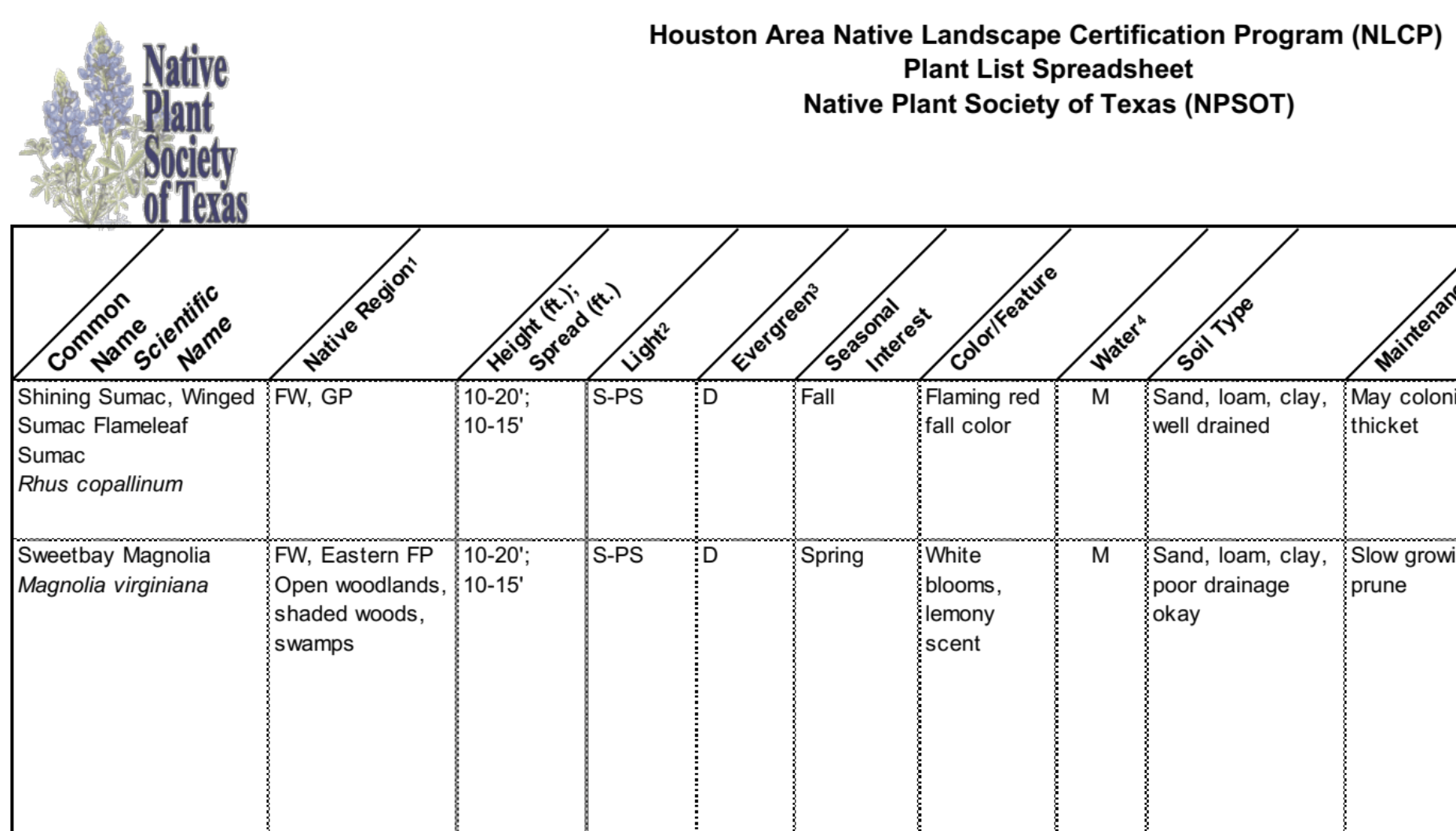
Native Plant Society of Texas (NPSOT)
Harris County Native Plant List.
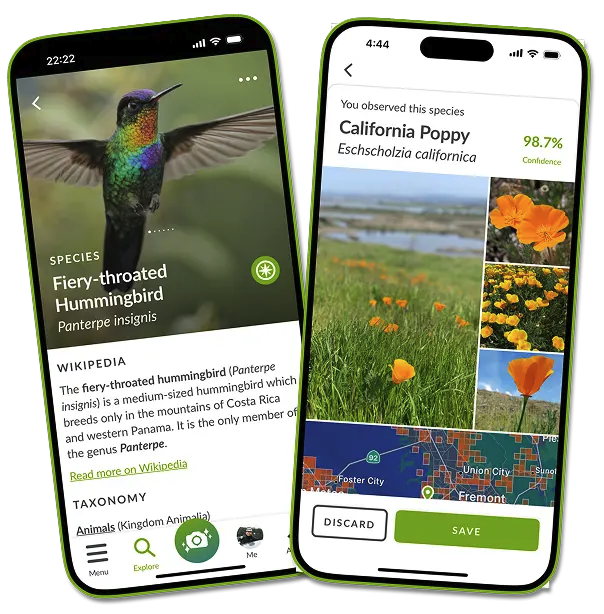
iNaturalist, Phone App
Like Minded Examples
iNaturalist app